Boiler pressure: what is normal and how to top it up
What the gauge should read, why a boiler keeps losing pressure, how to top it up and when it means a fault.

What the gauge should read, why a boiler keeps losing pressure, how to top it up and when it means a fault.
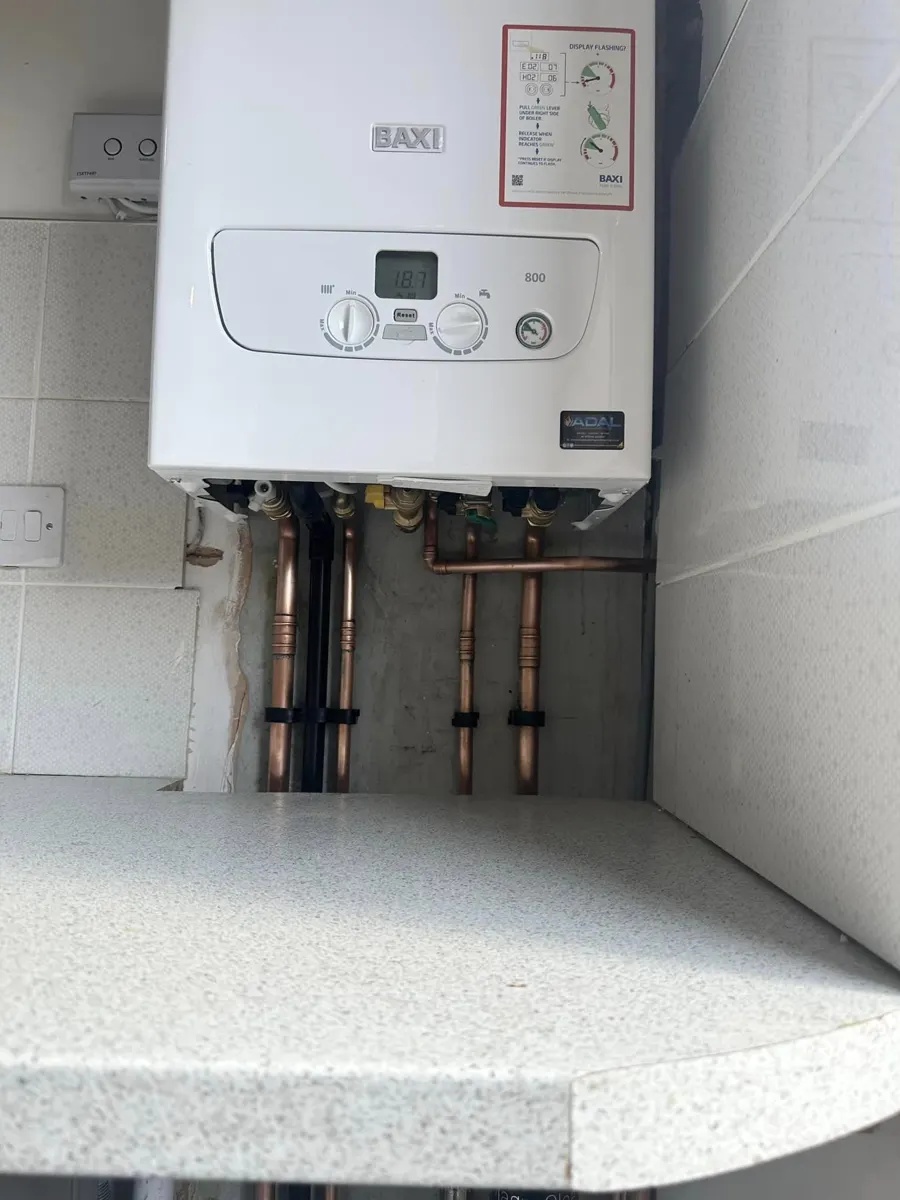
With the heating off and the boiler cold, most boilers sit between 1 and 1.5 bar. With the heating on it can rise to about 2 bar. That is normal, as the water expands when it warms up. Your boiler manual gives the figure for your model.
The most common reason is bleeding the radiators, which lets a little water out with the air. Other causes are a small leak on a radiator valve or a pipe, the pressure relief valve letting water out or an expansion vessel that has lost its charge. The expansion vessel is checked and recharged as part of a yearly boiler service.
Switch the heating off and let the boiler cool. Most combi boilers have a filling loop underneath: a silver braided hose with a valve at each end. Open one valve, then slowly open the other and watch the gauge. Close both when it reads about 1.2 to 1.5 bar. Some boilers have a built-in lever or key instead, so check the manual first. If the boiler shows a fault code, reset it once the pressure is back up.
If the gauge reads over 2.5 bar when cold, check the filling loop valves are fully closed. You can bring it down a little by bleeding a radiator, with a towel underneath. If it climbs towards 3 bar when the heating is on, the pressure relief valve will start letting water out through the pipe outside.
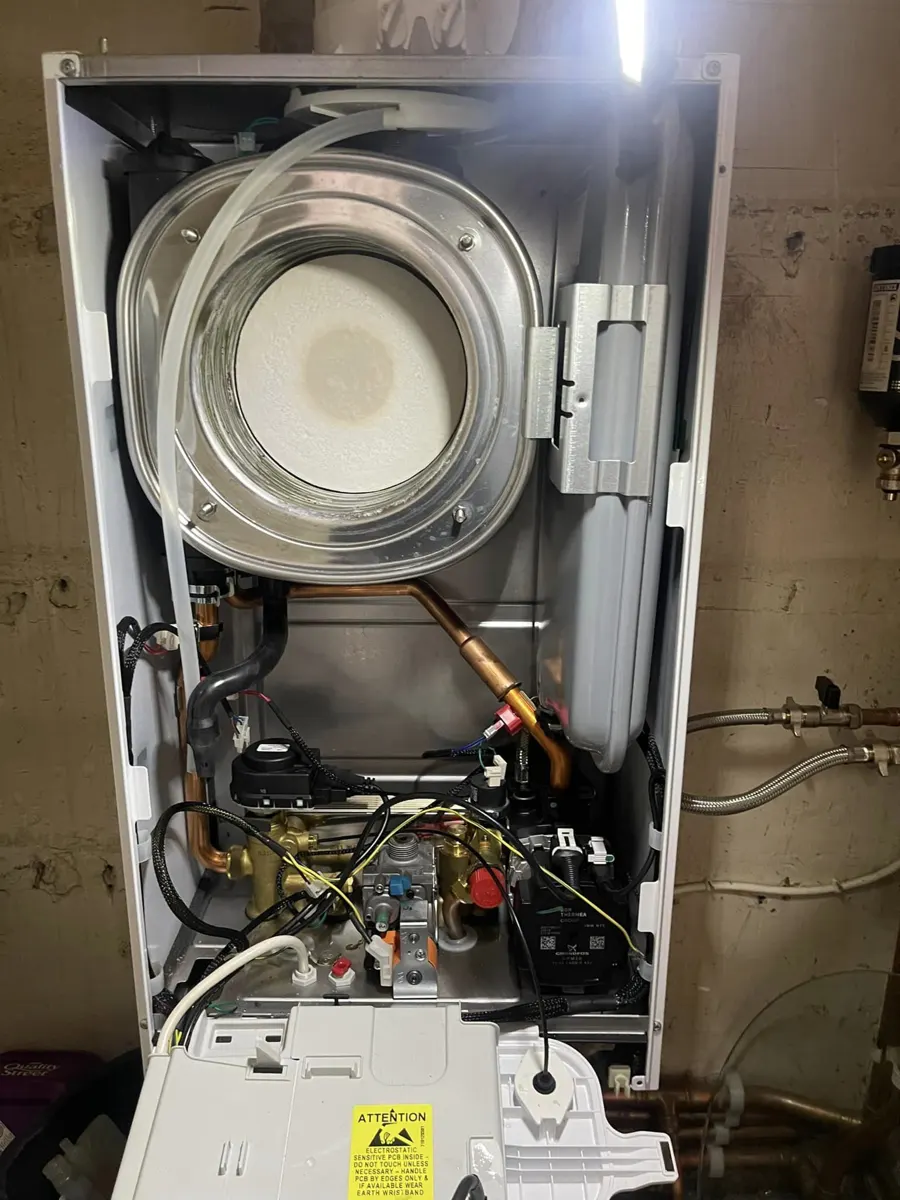
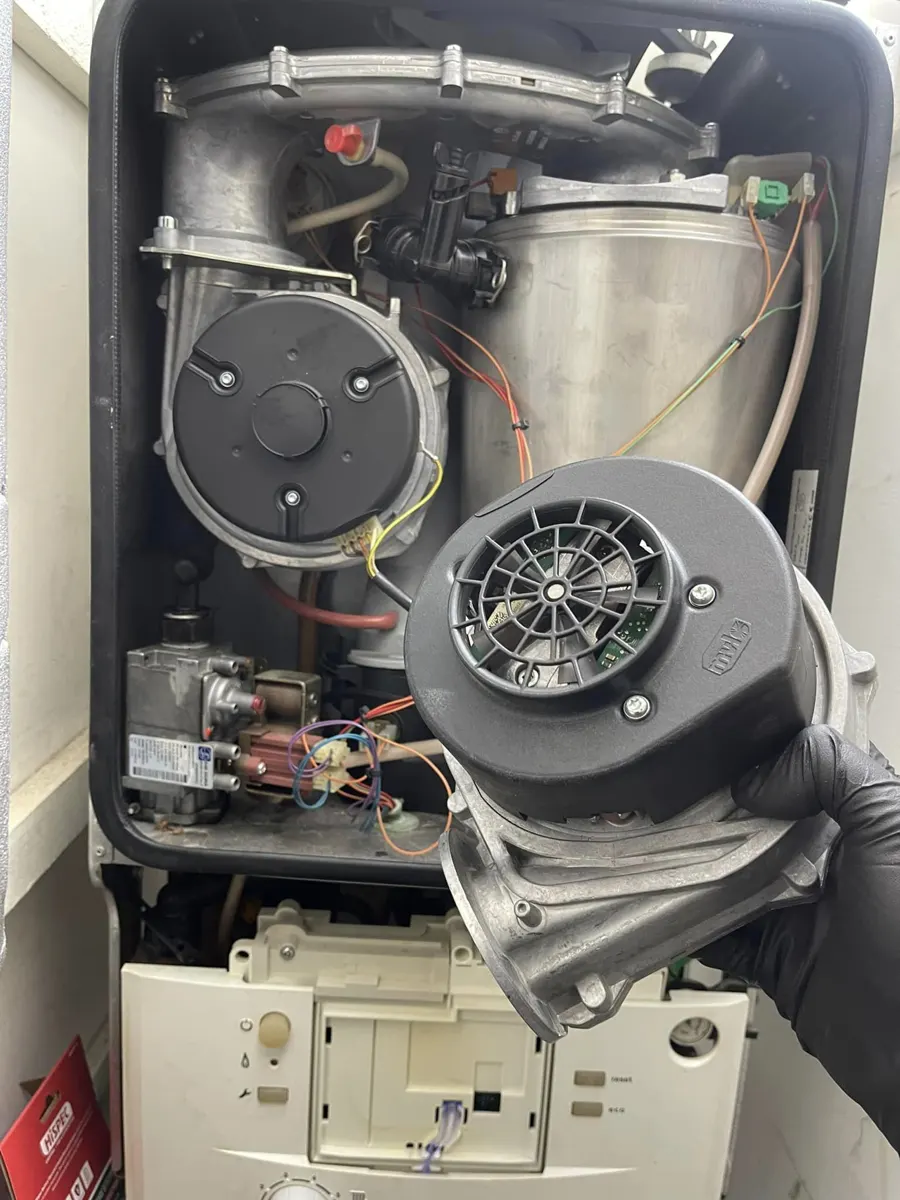
When we are called out to a boiler that keeps losing pressure in Doncaster, the most common cause we find is the expansion vessel. It is a small tank inside or next to the boiler with an air cushion that soaks up the water as it heats and expands. Over time it loses its air, so the pressure shoots up when the heating comes on, the relief valve lets water out and the pressure is low again once it cools. We recharge the vessel and check it holds its charge. If it has failed, we replace it. It is also checked on every boiler service we do.
Find the small copper pipe that runs from the boiler through the wall. If it is dripping or the wall below it is damp, the pressure relief valve is letting water out. That needs an engineer.
Ring us if you need to top it up more than once every few months, if the pipe outside drips, if the pressure jumps high when the heating comes on and drops low when it goes off or if there is water under the boiler. Never take the cover off the boiler yourself. Anything inside it is gas work and must be done by a Gas Safe registered engineer. Our engineers are based in Doncaster and can usually find the cause on the first visit: see boiler repairs in Doncaster.
Pressure is one of a few checks that help avoid a breakdown. See keeping your boiler running smoothly for the others.
Need a hand with any of this? Ring us on 07506 522550 or send the form.
Between 1 and 1.5 bar when the heating is off and the boiler is cold. Up to about 2 bar with the heating on is normal.
Many boilers stop and show a fault when the pressure falls too low. Top it up to about 1.2 to 1.5 bar, then reset the boiler.
The boiler has a pressure relief valve that lets water out through the pipe outside before it gets too high. If the pressure keeps rising, ring an engineer.
Rarely. Once or twice a year after bleeding radiators is normal. If you are topping it up every few weeks, there is a leak or a fault to find.
No sales call and no obligation. If it's urgent, ring us.
07506 522550